

Gravel Base vs. Concrete Base: Which Is Right for Your Project?
October 1, 2026
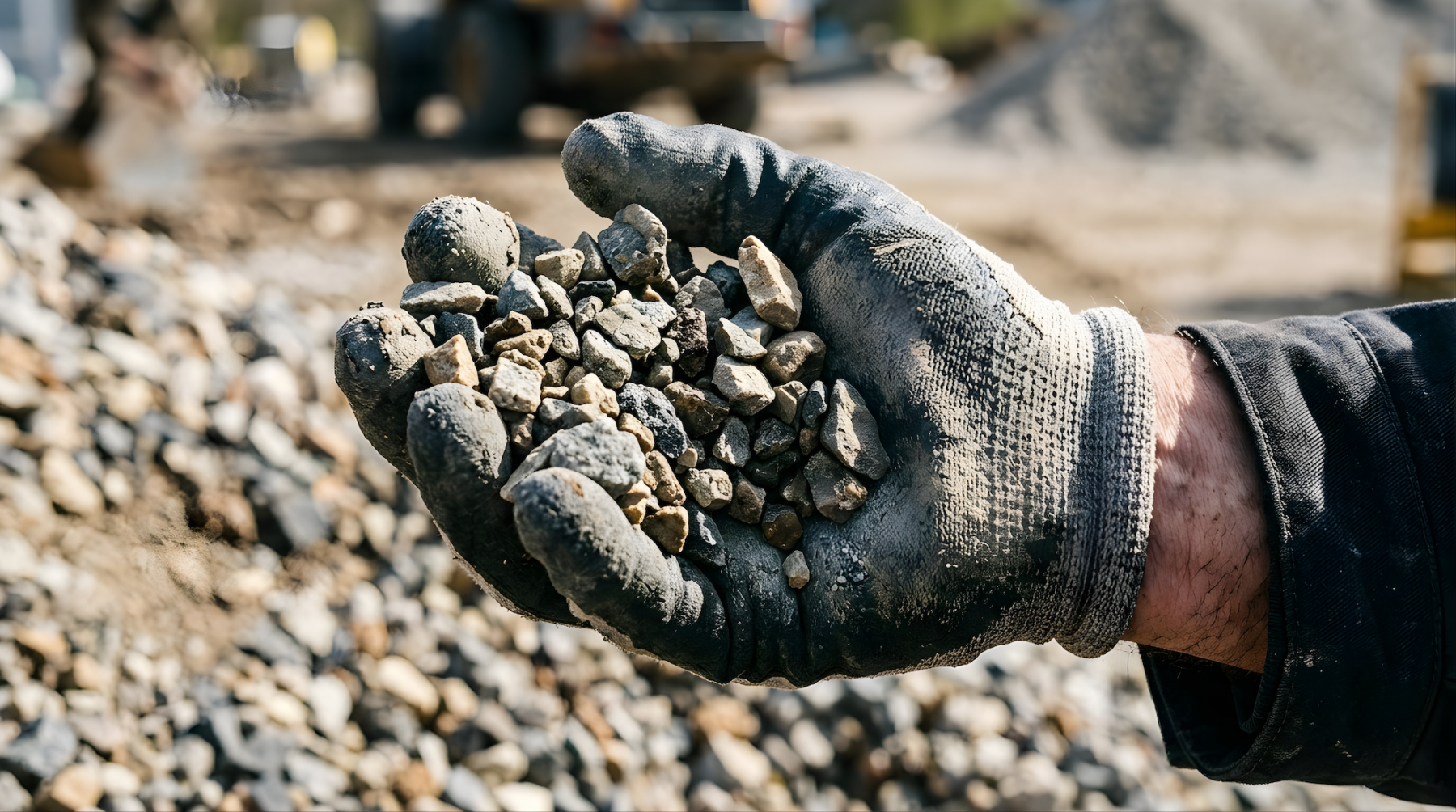
Gravel and concrete can serve the same driveway, parking area, or equipment pad, but they hold up to that job in very different ways. The right pick comes down to what the surface will carry, how water moves across the site, and how much upkeep an owner wants to take on once the work is done. Get those three factors straight, and the decision usually makes itself.
Load, drainage, seasonal movement, cost, and upkeep each push the decision in a specific direction.
How Do Gravel and Concrete Handle Heavy Loads?
Load is the first factor that narrows the choice. A gravel base handles passenger vehicles, foot traffic, and light equipment well once it is graded and compacted correctly. Push repeated truck or farm-equipment traffic across it, though, and loose stone works out of position faster than most owners expect.
Concrete carries that same heavy, repeated load without shifting. The slab spreads weight across its full surface instead of relying on stone-to-stone contact to stay put. A parking area or equipment pad seeing daily truck traffic asks far more of a base than a driveway used mostly for cars, and that gap in load is usually what points toward one material over the other.
How Do Drainage and Freeze-Thaw Conditions Affect the Base?
Once load is settled, water is what wears a base down next, whether the surface above it is loose stone or a poured slab. A gravel base sheds water through the gaps between stones as long as it holds a crown. A concrete slab needs that drainage solved before the pour, since the slab traps whatever moisture sits underneath it once it cures.
Freeze-thaw cycles turn trapped water into a real problem. Moisture that cannot drain expands as the ground freezes and settles unevenly as it thaws. Under gravel, that shows up as heaving. Under concrete, it shows up as cracking along the joints. Proper crown and compaction before either material goes down is what keeps that cycle from reaching the surface.
What Upkeep Do Gravel and Concrete Require?
Upkeep is where the two materials separate most. Gravel needs steady attention. A driveway or lot usually takes new material worked into the surface every two to five years, plus periodic grading to smooth ruts and rebuild the crown as traffic wears it flat.
Concrete asks for less frequent work, though the work looks different: sealing joints, patching the occasional crack, and keeping runoff from pooling against an edge where it can undermine the base below. An owner who likes to handle maintenance directly, with a grader and a few bags of patch material, tends to lean gravel. An owner who would rather touch the surface only once every several years leans concrete, higher upfront cost and all.
HK Contractors grades crushed river rock from three-eighths of an inch up to two inches, sized for both a compacted base layer and a finished driving surface. That covers the gravel side of the decision with one product line.
How Do Gravel and Concrete Compare on Cost and Installation Time?
Cost and timeline split the two just as sharply as upkeep. Gravel costs less to install and goes down in a single day for most driveways, with no cure time before the surface can carry traffic. That makes it the faster, cheaper path when a project needs to open quickly.
Concrete costs more upfront and needs several days before it can take vehicle weight, plus roughly a month to reach full rated strength. On a tight schedule, that wait can move a completion date. HK Contractors supplies the ready-mixed concrete for projects where the finished look and the lower long-term upkeep are worth the higher cost and the extra time.
Which Projects Are Best Suited for Gravel or Concrete?
With load, drainage, upkeep, and cost each pointing somewhere, matching the material to the project is mostly a matter of pulling those factors together.
- Residential driveways with mostly passenger traffic work well with either material. The call usually rests on budget and how much upkeep an owner wants going forward.
- Parking areas and loading zones with regular truck traffic hold up longer under concrete, since the slab spreads that weight instead of letting it work loose stone apart.
- Equipment pads carrying concentrated point loads from stored machinery favor concrete for the same reason.
- Rural access roads and farm lanes are rarely worth pouring. Gravel handles that use at a fraction of the cost.
Many sites end up using both, with aggregate building the base and concrete finishing the surfaces that carry the heaviest loads. HK Contractors’ own look at base rock, concrete, and gravel across a property covers that pairing in more depth.
Getting the Base Right the First Time
The choice between gravel and concrete comes down to what the finished area will carry, how water moves across the site, and how much surface maintenance makes sense for the property. Gravel fits many driveways, access roads, and lighter-use areas. Concrete becomes the stronger option as repeated truck traffic and concentrated equipment loads climb.
HK Contractors supplies ready-mixed concrete and the aggregate materials needed to build and maintain these surfaces across Idaho, Montana, and Wyoming. Request a quote to match the material, base preparation, and installation approach to what a specific project actually demands.